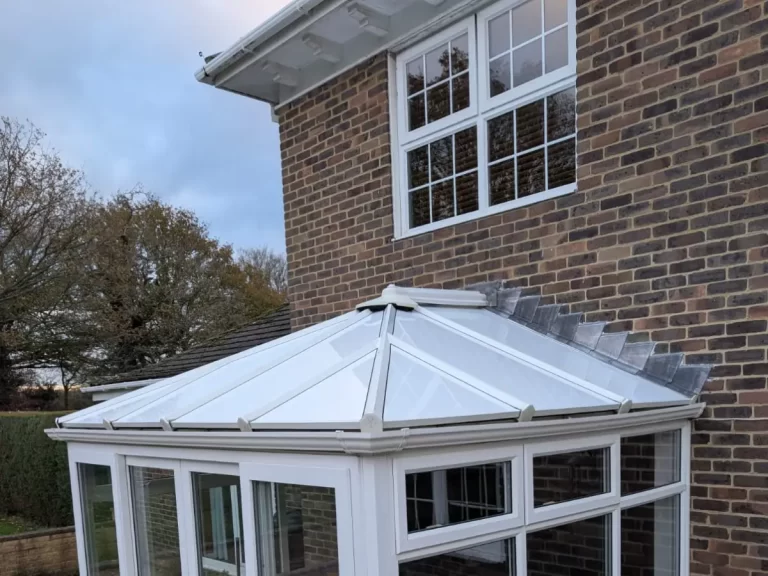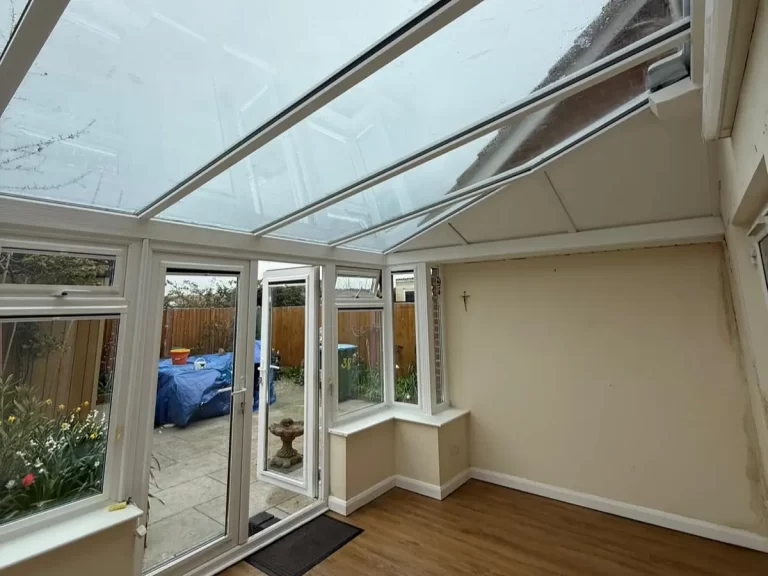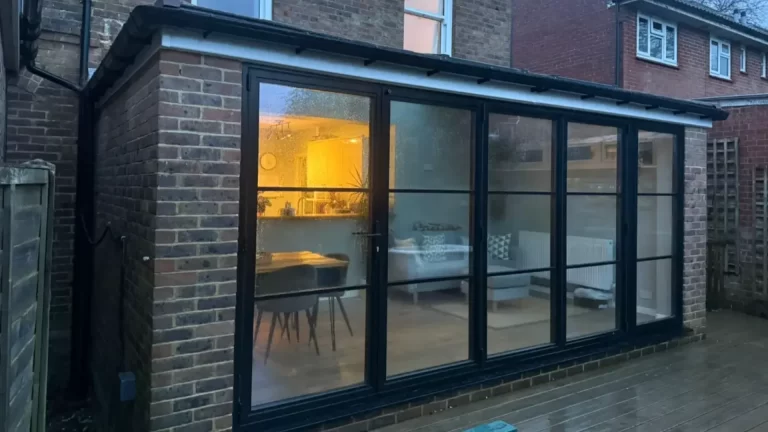



It is no secret that conservatories are inefficient when it comes to energy thanks to the materials used - polycarbonate or glass. In 2010, Building Regulations in the UK changed, removing the requirement for 75% of conservatory roofs to be translucent. This meant other materials and styles of roofing could be used, leading to roof replacements that enhance energy efficiency in the space. Now, with plenty of solid conservatory roof options, people are left wondering, “What is the most energy-efficient conservatory roof?”
The truth is, any solid conservatory roof is going to be far more energy-efficient than a traditional conservatory roof, whether you choose a tiled roof, flat roof, or install eco-panels.
Today, technology has also enhanced the energy efficiency of traditional materials, with Eco-Shield polycarbonate roof panels or an advanced glass conservatory roof.
At Ecozenic, we offer a range of energy-efficient conservatory roofs, which allow you to upgrade just the roof without replacing the whole structure. Thanks to the different options available, you will be able to find a solution that seamlessly blends in with your existing space and house, keeping in style with the look and feel of your home.
In this blog, we discuss which conservatory roof replacement option is the most energy-efficient.
Types of Conservatory Roofs
As you will have seen in our introduction, there are several types of conservatory roofs that you can replace your existing ones with. So what are they?
Tiled Conservatory Roofs
Tiled roofs recreate a similar look to that of the roof on your house, making your conservatory look more like an extension while keeping the defining shape of a conservatory.
These roof replacements have a lightweight aluminium frame and 185 mm of moisture-resistant insulation. This insulation layer prevents heat from escaping or penetrating your room, so you can keep the space at a comfortable temperature without using more energy.
The U-value of this roof type can be as low as 0.12 W/m2K.
Flat Conservatory Roofs
While enhancing energy efficiency, you can also modernise your conservatory with a flat roof and double-glazed skylights.
The solid roof is made with a superior thermal insulation layer, which, like the tiled roofs, means heat is kept in when needed to stay warm or kept out when needing to stay cool.
You might be thinking that the glass roof light will counteract that insulation, but with these roofs, this isn’t the case.
The glass comes equipped with Thermlock® multi-chamber technology, 28 mm of glazing and solar control to reflect summer heat and retain winter warmth, working with the insulation of the flat roof to create a highly energy-efficient roof.
The U-value of these conservatory roof replacements is 0.13 W/m2k.
Eco-Panels
Sometimes, you don’t need to completely replace the roof to make your conservatory more energy-efficient. Simply installing eco-panels to the existing roof will help reduce energy consumption and improve efficiency.
These eco-panels are 8mm thick with an insulated infill powder coating and an insulated core to provide excellent thermal efficiency.
Again, adding the additional insulation to your conservatory roof will mean warmth can’t get out in winter, nor can it enter during summer, so you no longer have an igloo from October to March or a sauna from April to September.
The U-value of these 28mm thick panels is 0.98w/m2k.
Eco-Shield Polycarbonate Conservatory Roofs
Thanks to new technology, we now have an advanced polycarbonate roof that meets the updated Building Regulations for conservatories and their energy efficiency requirements.
These panels let the natural light through to create a traditional light and airy conservatory, meaning less energy is needed for artificial lighting, while also adding better insulation to the roof to keep heat in or out, depending on the time of year.
These Eco-Shield panels achieve U-values as low as 0.83W/m².
Glass Conservatory Roofs
Finally, you have glass conservatory panels.
Similar to the above panels, the technology of these glass roofs has been developed, which allows for more insulation in the roof while keeping the same amount of natural light streaming through.
These offer the same benefits as the Eco-Shield panels, as they keep the room at a consistent temperature, so you use less energy for that. They also mean less artificial light is needed, so you use less energy lighting the space too, further reducing energy bills.
Why Solid Roofs Are Most Energy-Efficient
While glass and polycarbonate roofs have developed and now include more insulation, they might not be as energy efficient as you wish your conservatory to be. So, solid conservatory roofs are the way to go if you desire the most thermally insulated roofing option.
Why? Because they offer superior insulation that works better to stop heat from escaping or penetrating the space. This means you don’t have to consume lots of energy to get the room to a comfortable temperature, all for it to disappear through draughty roof panels.
Solid roofs offer benefits such as:
- Temperature regulation benefits
- Reduced heat loss in winter
- Better temperature control in summer
- Impact on energy consumption and energy bills
- Better thermal performance metrics
Benefits Beyond Energy Efficiency
Solid roofs also provide many benefits that extend beyond improved energy efficiency.
- Noise reduction
- Durability
- Year-round usability
- Property value increase
- Aesthetic improvements
As most solid roofs are easily customisable, you are able to design a roof that complements your home. So, as well as saving money, you are also enhancing the look of your conservatory, which can often translate to a higher property price if and when you want to sell.
What To Consider When Choosing A Conservatory Roof Replacement
As you can see, you have plenty of options if you want to replace your roof to improve energy efficiency.
When choosing, there are a few considerations you need to make, and these might help narrow down your choices:
- Installation considerations - how will it be installed? Will your existing structure need additional support?
- Cost vs long-term savings - how much will the installation cost? How long will it take for you to get that money back in savings? How much will you be saving?
- Planning permission requirements - will you need planning permission for this conservatory roof replacement?
- Choosing the right materials and colours? - how much choice is there when it comes to the design of the roof? Can you get it to match your existing home or complement it to enhance aesthetics?
Install an Energy-Efficient Conservatory Roof Replacement With Ecozenic
So, what is the most energy-efficient conservatory roof?
Solid roofs provide enhanced thermal insulation, making them more energy-efficient, even with the developments in glass and polycarbonate.
The tiled roofs offer the best energy efficiency, with their U-value being as low as 0.12 W/m2K. The flat roofs with skylights are the next best for energy efficiency, with their U-value of 0.13 W/m2K.
At Ecozenic, we offer all of the above options, allowing you to choose the best one for your home and conservatory.
We are experts at conservatory roof conversions and replacements and understand the importance of optimising energy efficiency in this space so you can make better use of it.
With over 20 years of experience helping residents swap roofs, you can trust us to guide you through the process of choosing and designing the right conservatory roof for you, as well as a reliable and efficient installation process that will keep disruption to a minimum and get the job done as quickly as possible while meeting our incredibly high standards.
Our accredited team provide:
- Bespoke solutions
- Quality craftsmanship
- Clear communication
- Support every step of the process
If you are interested in learning more about conservatory roof replacement options and which is the most energy-efficient, get in touch with our team today. Call us on 01202 798666 or complete our online contact form to request a callback.