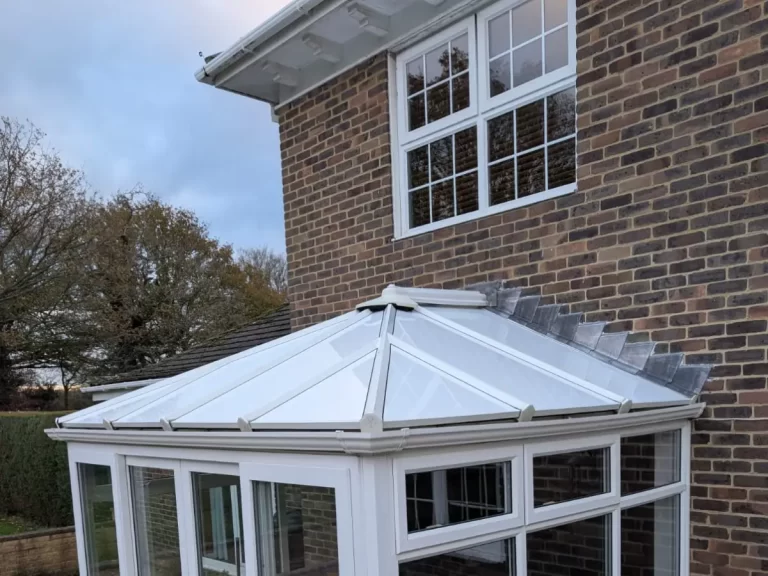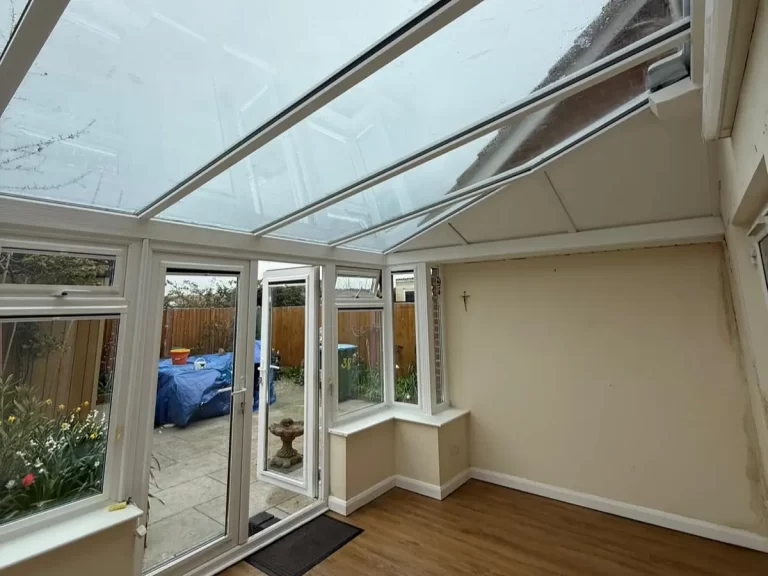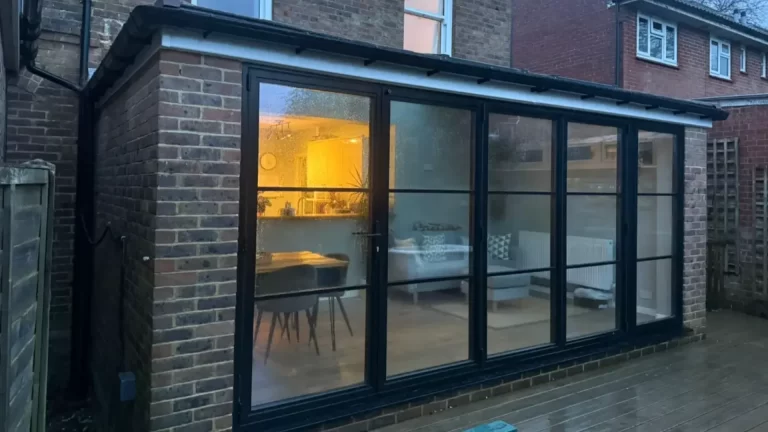



Replacing a conservatory roof sounds straightforward enough until the question of building regulations comes up. For a like-for-like polycarbonate swap, you may not need to do much at all. For a solid tiled or insulated panel roof, the rules are different, and getting them wrong can cause real problems down the line. This guide covers conservatory roof replacement building regulations from first principles: when they apply, what they require, and what documentation you need to have in place before work starts.
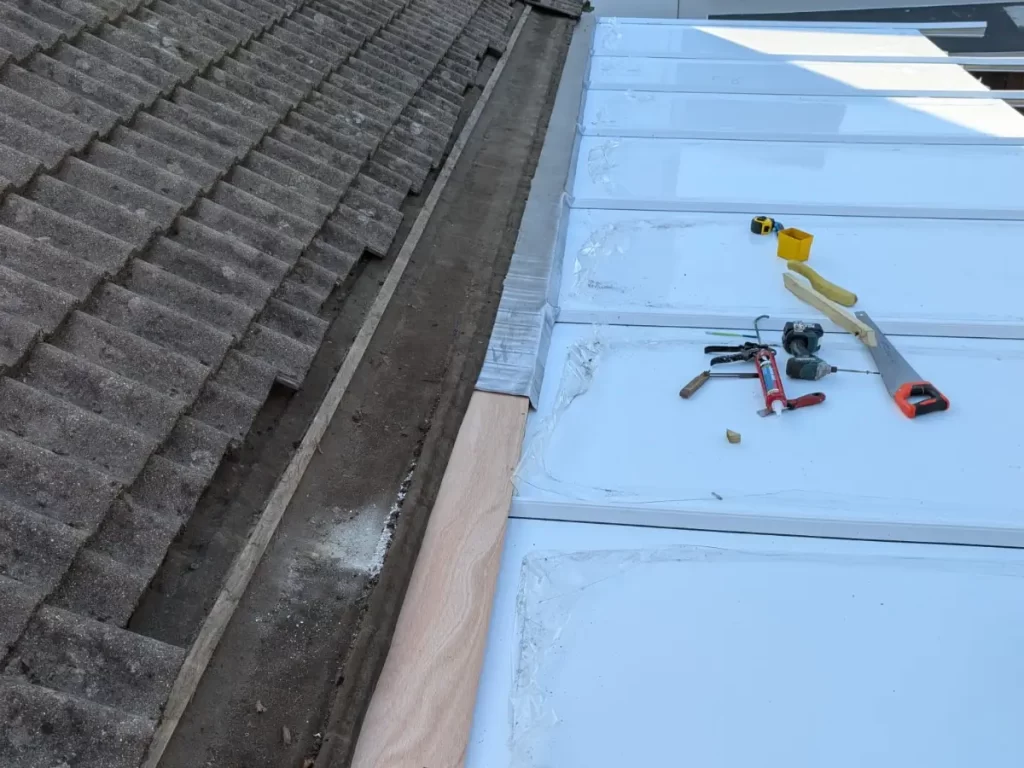
Does Your Roof Replacement Trigger Building Regulations?
The starting point is understanding what makes a conservatory legally exempt. In England, a conservatory is generally exempt from conservatory roof replacement building regulations provided it meets three conditions: the roof is at least 75% translucent, the walls are at least 50% glazed, and there is a set of external-standard doors separating the conservatory from the main house. That thermal separation is key. It means the conservatory is treated as a distinct, unheated structure rather than an extension of the living space.
Replacing a translucent polycarbonate roof with another translucent product, such as a modern performance glass system, will usually preserve that exempt status. But fit a solid, insulated, or tiled roof and the picture changes. The structure no longer meets the glazing threshold, building control classifies it as an extension, and full building regulations approval is required.
One practical rule of thumb to remember is that if less than three-quarters of the roof area remains translucent after the work, you need to notify building control before you start. Always get that confirmation in writing, whether by email or via your council’s planning portal.
Choosing Your Building Control Route
Once you have established that your project triggers building regulations, the next step is choosing how to apply. In England and Wales, there are two main routes:
- Full Plans Application: You submit detailed drawings and specifications to your local authority or an approved inspector before work begins. Building control reviews the plans and issues approval in principle. Inspections then take place at key stages during the build. This route takes longer upfront but gives you written confirmation that the proposed design is compliant before a single tile goes on.
- Building Notice: A faster route that skips the upfront plan approval. You notify building control and work begins, with inspectors checking compliance at each stage. There is more risk here as if something does not meet the standard, you may need to redo it.
For a solid roof conversion, the Full Plans route is generally the more sensible choice. It produces a clear paper trail, reduces the chance of costly remediation, and makes it easier to obtain your building regulations certificate at completion. Ecozenic will be able to advise on who is responsible for making the application, but the legal obligation ultimately rests with the homeowner unless otherwise agreed in writing.
Structural Calculations and Load Assessment
A solid roof is heavier than the polycarbonate or glass it replaces. That difference in load is one of the central concerns in conservatory roof replacement building regulations, and it is why a structural engineer’s assessment is not optional: it is a required part of the submission.
Structural calculations for conservatories need to confirm several things. First, that the existing foundations can carry the increased dead load of the new roof. Second, that the dwarf walls, window frames, and eaves beam are adequate for the new structure. And third, that the new rafters, trusses, and fixings are designed to handle not just the weight of the roof itself but also imposed loads from snow and lateral pressure from wind.
Where an installer uses a proprietary roof system with pre-approved structural details, some of this work may already be done. But pre-approval does not remove the need for building control sign-off on your specific project. The existing structure still needs to be assessed on its own merits, and the engineer’s report and calculations need to be submitted and retained as part of the project record.
Thermal Performance: Meeting Approved Document L
Approved Document L [1] is the section of the building regulations concerned with energy efficiency, and it is the one most directly relevant to solid roof conversions.
When your conservatory crosses the line from exempt structure to regulated extension, the roof must meet current U-value targets for extensions. Under approved document L, the roof U-value for a new solid conservatory roof should reach 0.18 W/m²K or better, though you should verify the current figure with building control at the time of your project, as these targets are updated periodically.
Meeting the U-value target is not just a matter of insulation thickness. Part L compliance also requires attention to thermal bridging at the junctions between the new roof and the existing house wall, at the eaves, and at the ridge. Cold bridges at these points can undermine the overall thermal performance of the installation even if the roof build-up itself is well-specified.
There is one further implication worth understanding. If the existing doors between the house and the conservatory are removed as part of the project, the conservatory effectively becomes part of the heated living space. At that point, UK thermal performance requirements may also apply to the walls, floor, and glazing, not just the roof. It is a scenario that catches people out, and it is worth raising with your installer and building control before the design is finalised.
Ventilation, Fire Safety, and Electrical Compliance
Part L compliance sits alongside several other parts of the building regulations that apply once a conservatory is reclassified as an extension. Three are worth understanding clearly.
- Part F [2]: This covers ventilation. The new internal environment created by a solid roof will behave differently from a glazed space, and it needs adequate background ventilation through trickle vents in windows or doors, as well as sufficient openable area for purge ventilation. If the roof construction includes a ventilated cold roof void, the design must also include appropriate air paths to prevent condensation building up in that void over time.
- Part B [3]: Covers fire safety. The relevant considerations here are the fire performance of the roof covering relative to the proximity of boundaries, and, if the conservatory is now a habitable room, whether the internal linings and any doors connecting to the main house provide appropriate fire resistance. This is particularly relevant for properties that share a wall with a neighbour.
- Part P [4]: Covers electrical safety. Any new lighting circuits, sockets, or electric underfloor heating installed as part of the project must be designed and fitted by a registered competent person or inspected under building control. Electrical installation certificates must be provided to building control and to you as the homeowner. This documentation forms part of the approved document L compliance record and should be stored with the rest of your project paperwork alongside the building regulations certificate.

Inspections, Certification, and What to Keep
Building control inspections happen at set stages: before work starts, at key structural points during the build, and at completion. The inspector will check that the work matches the approved plans, that insulation and vapour control layers are installed correctly, that flashings and cavity trays are properly detailed where the new roof meets the existing house wall, and that electrical certificates are in order.
When all inspections are passed and the work is signed off, you receive a building regulations certificate. This document is not a formality. It is the legal confirmation that the work was carried out to the required standard, and it will be requested by solicitors if you sell the property. Conservatory roof replacement building regulations are important as missing certification can delay or complicate a sale, and retrospective regularisation is both time-consuming and expensive.
Keep the full project file together: the completion certificate, the structural engineer’s report and calculations, the roof system documentation and any product warranties, and the electrical installation certificates. Some insurers will also want to see evidence of building control sign-off if a claim relates to the roof. A complete set of documents filed somewhere accessible is one of those things you do not think about until you need it, at which point its value becomes obvious.
If you are working with a reputable installer, they should guide you through this process from the outset, rather than leaving compliance as an afterthought. At Ecozenic, we manage the full installation process in-house, which means we can advise on regulatory requirements from the first conversation.
Talk to the Team at Ecozenic
If you are planning a conservatory roof replacement and want to understand where your project stands with building regulations, we are happy to talk it through. Call us on 01202 798666 or fill in our contact form and a member of our team will get back to you.
We have been fitting conservatory roofs across Dorset, Hampshire, Wiltshire, and the wider South of England for over 20 years, so you can be confident the job will be done properly from start to finish.
References
[1] GOV.UK, “Approved Document L”: https://www.gov.uk/government/publications/conservation-of-fuel-and-power-approved-document-l
[2] GOV.UK, “Part F”, https://www.gov.uk/government/publications/ventilation-approved-document-f
[3] GOV.UK, “Part B”, https://www.gov.uk/government/publications/fire-safety-approved-document-b
[4] GOV.UK, “Part P”: https://www.gov.uk/government/publications/electrical-safety-approved-document-p